

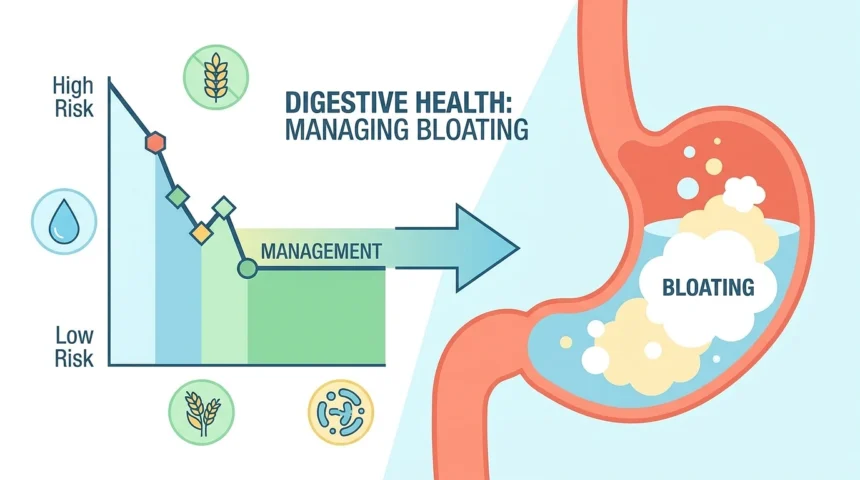
Three weeks of clean eating, no movement on the scale, and a stomach that feels bigger than it did at the start. That combination sends more people back to the biscuit tin than any other single thing in dieting.
Both complaints usually share one explanation. Water and gas volume can rise by a kilo or more while body fat is quietly falling, and the scale reports the net result as nothing happening. Bloating, read properly, tells a person which lever moved and which one to adjust.
A Scale Weighs Everything in the Body at Once
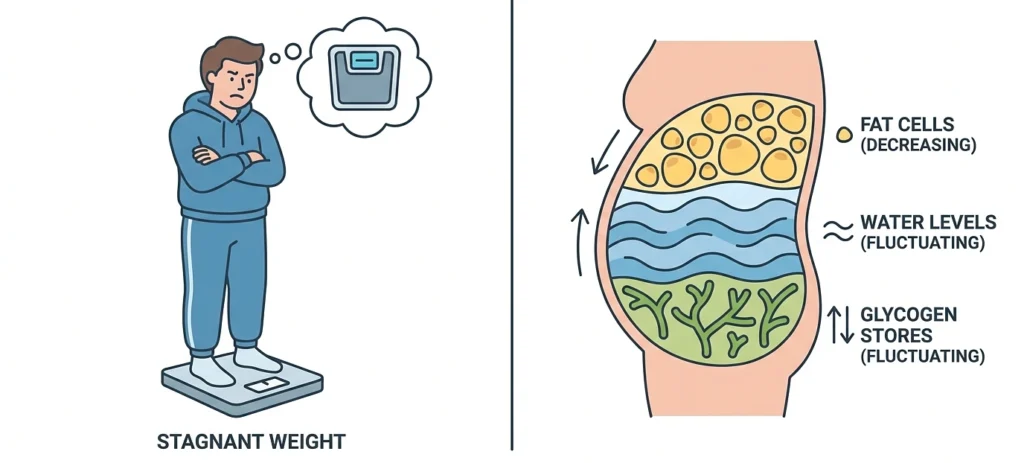
Bodyweight on any given morning is fat plus muscle plus bone plus blood plus water plus stored fuel plus whatever food is still in transit. Only one of those changes slowly.
Consider what a good week actually looks like. Losing 250 grams of fat in seven days is a solid result for someone already fairly lean. Daily water fluctuation alone commonly runs three to four times that size. The signal is smaller than the noise, and it stays smaller for weeks.
What follows is predictable in a way that has nothing to do with metabolism:
- The number sits flat for two or three weeks.
- Motivation drops and adherence gets sloppy.
- Someone concludes the plan failed and abandons it.
- The retained water clears a few days later, unnoticed, because nobody is weighing themselves anymore
Stored carbohydrate drives most of this. The body holds carbohydrate in liver and muscle as glycogen, bound to several times its own weight in water. Refill those stores with a higher carbohydrate weekend and the water follows automatically. Drain them on a low carbohydrate week and the water leaves.
That one mechanism explains the two most misleading experiences in dieting. The spectacular first week of any low carb plan is largely glycogen water leaving. The devastating Monday after a restaurant weekend is largely glycogen water returning. Fat storage at that pace would require a surplus of several thousand calories, which one dinner rarely delivers.
Four Kinds of Bloating, Four Different Messages
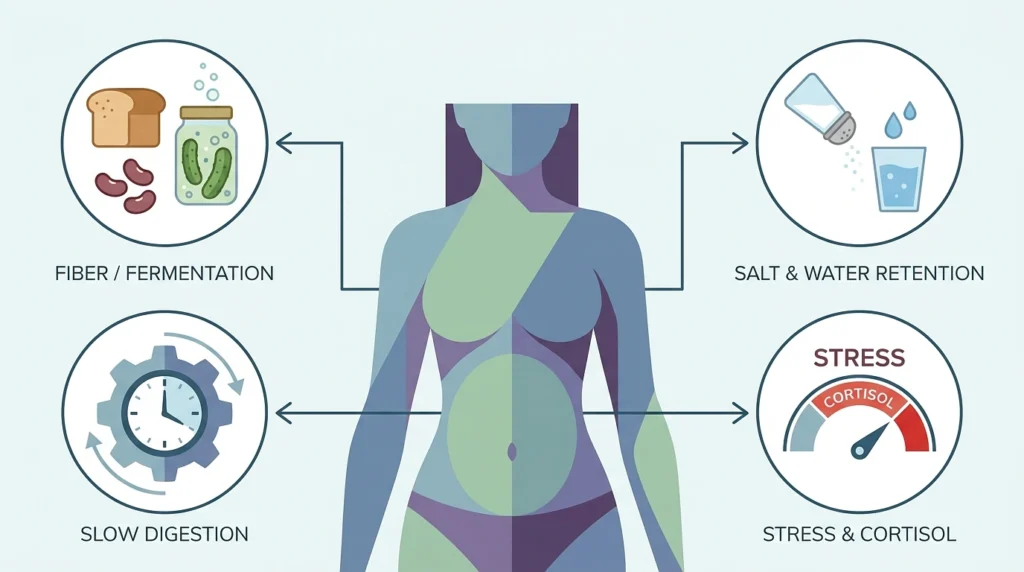
Treating bloating as a single condition throws away everything useful about it. Distension after meals has a different cause from swelling that greets someone at the bathroom mirror before breakfast, and the corrections are not interchangeable.
Tightness That Builds Through the Day
The classic pattern in anyone who recently improved their diet. Beans, lentils, raw vegetables and whole grains arrive together, often tripling fiber intake inside a fortnight. Gut bacteria ferment what the small intestine cannot absorb, fermentation produces gas, the abdomen distends.
Signs this is what is happening:
- Worst after the largest meal, better on waking.
- Started within a week or two of changing the diet.
- Improves on days with cooked vegetables rather than raw.
The gut microbiome adapts, given time. Raising fiber in stages across a month prevents most of it. This kind of bloating carries no information about fat loss, though it adds real centimetres to a waist measurement, which is how people talk themselves out of plans that were working.
General Puffiness Including Hands and Face
Swelling above the neck is not digestive. It is fluid retention, and sodium is usually behind it. A single restaurant meal can carry more sodium than three days of home cooking, and the body holds water in response to keep concentrations steady.
The rebound version deserves specific attention because of the damage it does. Strict eating for ten days, one large meal out, and the following morning shows a two kilogram gain. That reading is water and refilled glycogen almost in full. The response it provokes, cutting harder for the rest of the week, guarantees an identical rebound after the next social occasion. Restriction and rebound feed each other, and the scale never gets a chance to show the underlying trend.
Heaviness With Slow, Infrequent Bowel Movements
Eating less produces less waste, which sounds obvious and still catches people out. Fluid intake usually drops at the same time, since a large share of daily hydration normally arrives inside food rather than in a glass. Transit slows. Material accumulates. The scale registers it.
Practical fixes, in the order worth trying:
- Fluid intake up before anything else changes.
- Daily walking, which affects gut motility more than most people expect.
- Magnesium rich foods and adequate fiber, kept steady rather than spiked.
Persistent constipation that ignores all three is not a diet issue and belongs with a doctor.
Swelling Already Present on Waking
Nothing has been eaten yet, so nothing digestive explains it. This points at hormones and sleep. Chronic stress keeps cortisol elevated, elevated cortisol encourages sodium and water retention, and short sleep pushes the same lever.
Here the two halves of the problem meet. Dieting is a physiological stressor in its own right. A large deficit, hard training six days a week and six hours of sleep stack on each other, and the resulting water retention can hide four weeks of genuine fat loss.
The instinctive response makes it worse. Cutting calories further and adding sessions raises the stress load again. Plenty of people find their scale finally moves during a week at maintenance calories and conclude the break restarted their metabolism. It restarted nothing. It lowered the stress enough for the water to leave, and fat loss that had been happening all along became visible.
The Sugar-Free Problem Nobody Warns About
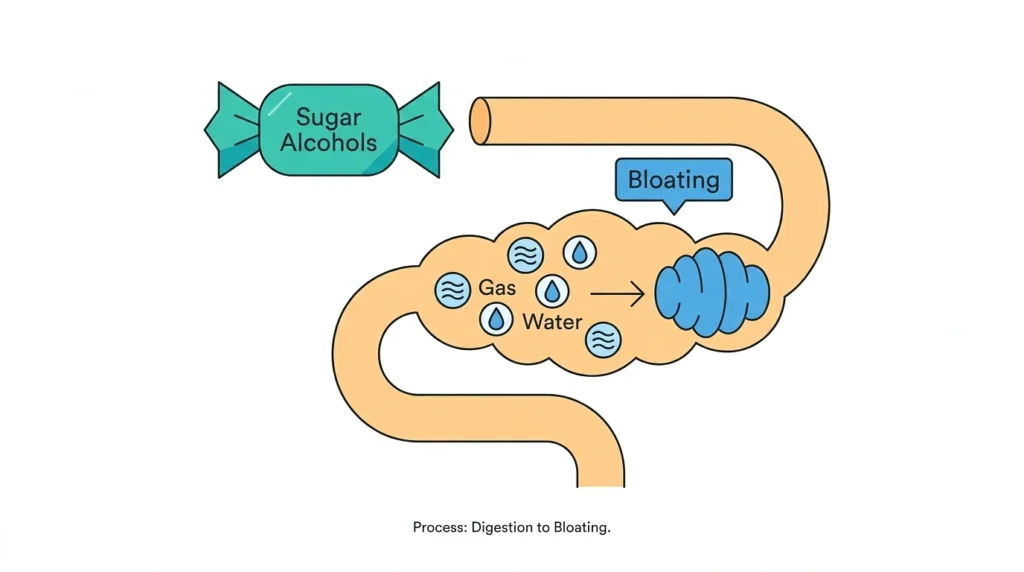
Diet products earn their own section because the mechanism is specific. Many rely on sugar alcohols including sorbitol, xylitol, maltitol and mannitol. The small intestine absorbs them poorly. What passes through ferments in the colon and draws water in behind it, producing gas and distension together.
Common sources worth checking labels for:
- Protein bars and meal replacement bars.
- Sugar-free chocolate, sweets and mints.
- Chewing gum, particularly in quantity.
- Diet desserts and “no added sugar” yoghurts.
Sorbitol and mannitol also count as FODMAPs, which makes them reliable triggers for anyone with irritable bowel syndrome. The correlation is easy to test at home. Track diet product servings against evening comfort for a fortnight and the pattern announces itself.
When the Stall Is Genuine
Pretending every plateau is an illusion would be its own dishonesty. Metabolic adaptation is well documented. A lighter body burns fewer calories at rest and in motion, appetite hormones shift toward eating more, and a deficit that worked at 90 kilos can be worth almost nothing at 78. Portion sizes drift upward across months in a way people genuinely do not notice in themselves.
Separating a real plateau from a masked one takes three to four weeks of unglamorous consistency:
- Weigh daily under identical conditions, same time and clothing, then read the weekly average rather than any single number.
- Measure the waist weekly, since it responds to fat loss and ignores glycogen.
- Keep sodium and fiber stable instead of swinging between weekday discipline and weekend excess.
- Log intake accurately enough to be uncomfortable, at least through the diagnostic period.
If the four week average refuses to move, the deficit has closed. That calls for a modest reduction in intake or a lift in daily movement, not another round of severity. If the average is drifting downward behind the daily chaos, nothing is broken except the interpretation.
Bloating accompanied by real pain, blood in the stool, fever, or weight loss nobody intended is a separate matter and needs medical assessment rather than dietary adjustment.
What the Body Is Actually Reporting
Distension that builds through the day points at fiber volume and how fast it was introduced. Puffiness in the hands and face points at sodium, or at a large meal two days ago. Heaviness with sluggish digestion points at fluid and food volume cut too far. Swelling already present before breakfast points at stress and sleep, the least popular answer and frequently the correct one.
Each of those corrections is milder than what people reach for by default, which is to eat less and train harder. Weight loss rarely stops as abruptly as the scale suggests. It usually continues underneath a layer of water and gas, entirely invisible, until somebody works out how to read it.