

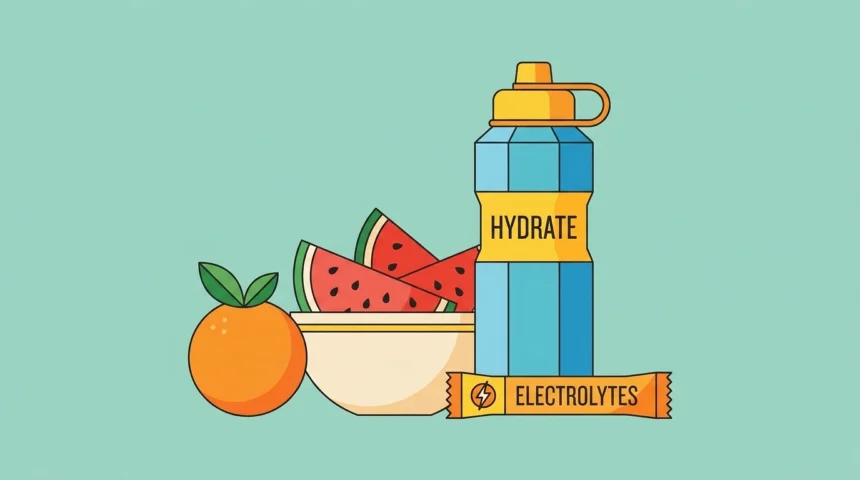
Plain water will not keep you safe through a serious heatwave on its own. Your body loses salt along with fluid when you sweat, so effective hydration during extreme heat means replacing both, pacing your intake through the day, and paying attention to the signals that matter more than thirst.
The Advice Everyone Repeats, And Where It Breaks
Every summer the same guidance circulates. Drink eight glasses. Carry a bottle. Avoid coffee. It sounds sensible, and for someone sitting in an air-conditioned office it mostly works, because that person was never in danger.
The advice breaks down for the people heat actually hurts outdoor workers, delivery riders, people in apartments without cooling, and older adults living alone. During the European heatwave of summer 2003, more than 70,000 people died beyond what would normally be expected, according to the landmark mortality analysis published in Comptes Rendus Biologies, and a large share were elderly people in their own homes. Many of them had water available. Availability was never the problem.
Two things went wrong instead, and they are the same two things that go wrong in every heatwave since.
The thirst signal fails. Thirst weakens with age. An eighty-year-old can be significantly dehydrated and feel nothing unusual, which is why “drink when you’re thirsty” is reasonable advice for a thirty-year-old and quietly dangerous advice for their grandmother. Certain common medications, including diuretics prescribed for blood pressure, compound the problem by pushing fluid out faster.
Water replaces the wrong thing. Sweat is not pure water. It carries sodium out of your body, and during heavy sweating the losses add up to grams of salt over a day. Replace those losses with plain water alone, in large volumes, and you dilute the sodium remaining in your blood. The condition is called hyponatremia, and it produces confusion, nausea, and headache, symptoms that look almost exactly like heat exhaustion. A study of Boston Marathon runners published in the New England Journal of Medicine found roughly one in eight finished the race with clinically low blood sodium, and the strongest predictors involved drinking the most fluid and gaining weight during the race. They followed the advice. The advice was incomplete.
What Your Body Is Actually Doing In The Heat
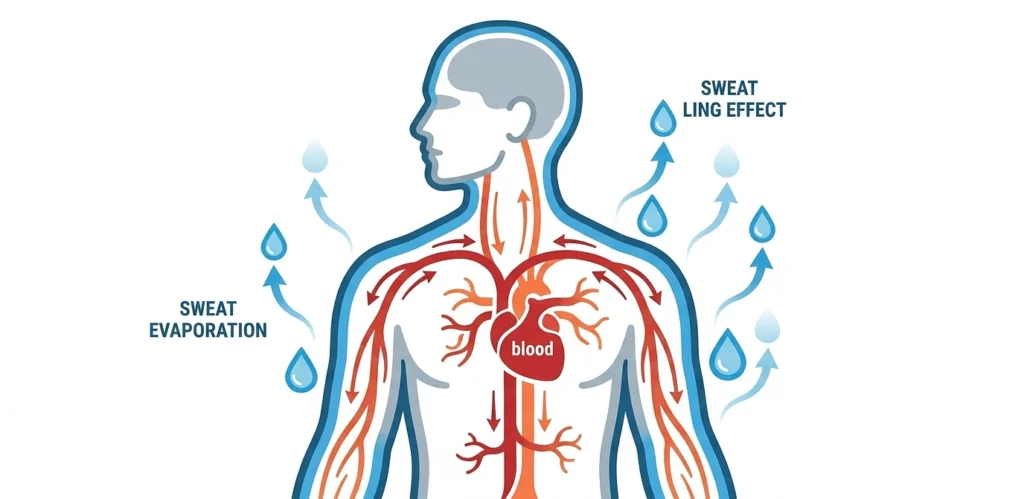
Your body has one serious tool for shedding heat when the air is hotter than your skin: evaporating sweat. During hard work in high heat, sweat output can exceed a liter per hour. You cannot drink your way to matching that in real time, and you do not need to. The goal is to keep the deficit small enough that your cardiovascular system can keep pushing blood to the skin, where heat escapes.
This is why dehydration in a heatwave is not really a comfort problem. It is a cooling problem. A dehydrated body sweats less and circulates blood less effectively, which means core temperature climbs faster, which is the chain of events that ends in heatstroke.
Humidity changes the math entirely. On a dry 42°C day, sweat evaporates and does its job. At 36°C with 70 percent humidity, sweat drips off you without evaporating, which means you are losing fluid and getting almost no cooling in return. Humid heat is more dangerous at lower temperatures than dry heat, and it drains your fluid reserves faster for less benefit.
A Hydration Approach That Actually Holds Up
Start before the heat does
Fluid you drink at noon on a brutal day is playing catch-up. Drink a large glass of water when you wake, before tea or coffee, and another with breakfast. Entering the hottest hours already topped up matters more than anything you do at the peak.
Put salt back, not just water
If you are sweating heavily for more than an hour or two, some of what you drink should contain sodium. You do not need a commercial sports drink, though they work. A homemade oral rehydration mix does the same job: half a teaspoon of salt and six teaspoons of sugar in a liter of clean water. The sugar is not there for energy. Glucose physically helps your intestines pull sodium and water across into your bloodstream, which is the mechanism behind the WHO’s oral rehydration salts formula that has saved millions of lives in diarrheal disease and cholera treatment. The same physiology applies to a construction worker in July.
Salty food counts too. This is one situation where a packet of salted peanuts or a proper salted meal is doing real physiological work.
Sip through the day instead of chugging
Your kidneys and gut can only process fluid so fast. Drink a liter and a half in one go and much of it passes straight through within the hour. A glass every 30 to 45 minutes through the hot part of the day keeps you far better hydrated than the same total volume in two or three heroic sessions, and it avoids the sodium-dilution trap.
Ignore the caffeine myth, respect the alcohol one
Habitual tea and coffee drinkers develop tolerance to caffeine’s mild diuretic effect, and research published in PLOS ONE comparing coffee against water in regular drinkers found no meaningful difference in hydration across blood and urine markers. If tea is how you normally drink fluid, keep drinking it. Alcohol is a different story. It suppresses the hormone that tells your kidneys to conserve water, so a few cold beers on a hot evening genuinely leave you drier than you started, right before you sleep through eight hours of continued sweating in a hot bedroom.
Reading Your Body Better Than A Bottle Count
Forget counting glasses. Two checks tell you more.
Urine color is the honest signal. Pale straw means you are fine. Deep yellow or amber means you are behind, regardless of how much you think you drank. Going many hours without urinating at all during a heatwave is a warning sign on its own.
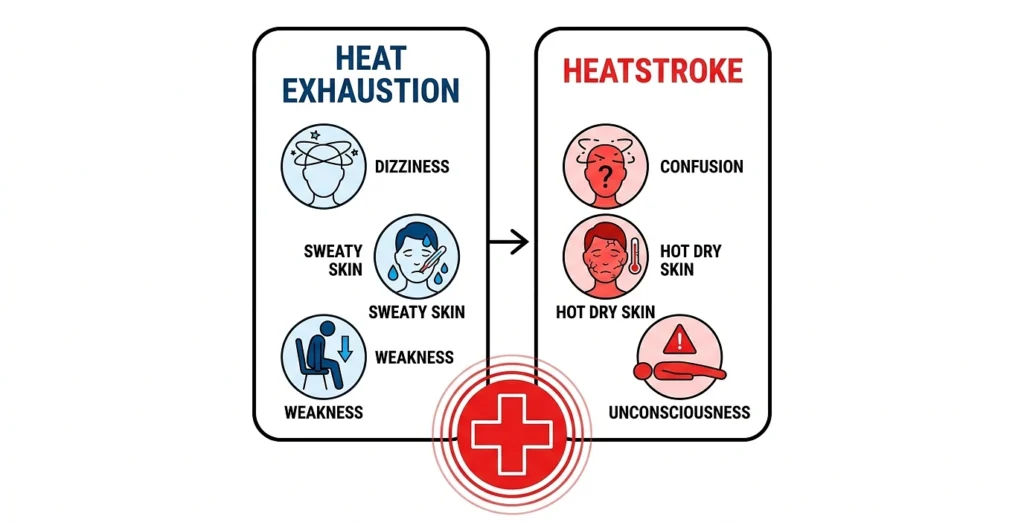
The symptom cluster that changes everything: confusion, dizziness on standing, headache with nausea, or skin that has gone hot and dry after being sweaty. Hot dry skin in particular can mean the sweating mechanism is failing, which the CDC identifies as the hallmark of heatstroke, the point where the body can no longer control its own temperature. That is no longer a hydration problem you fix with a drink. Move the person somewhere cooler, wet their skin, fan them, and get medical help. Cooling the body comes first; fluids come second.
The People Who Need Someone Else Watching
The most important hydration action during a heatwave often is not something you do for yourself. Older relatives and neighbors, especially those living alone, need someone to physically check on them daily, because their own thirst will not warn them and their bodies shed heat poorly. A phone call helps. A visit is better, because you can feel how hot the room actually is. Bring a bottle of ORS or a salty snack when you go, and notice whether the water glass by their chair has actually gone down since yesterday.
Small children sit in the same category for the opposite reason. They dehydrate faster than adults relative to their size, and a toddler absorbed in playing will not stop to drink. Offer fluids on a schedule, not on request.
Heatwaves are becoming longer and more frequent across most of the world, and the gap between “drink more water” and what the body actually needs is a gap people keep falling into. Close it with salt, pacing, and attention to the people whose bodies have stopped warning them, and a heatwave becomes something you manage rather than something you survive.