

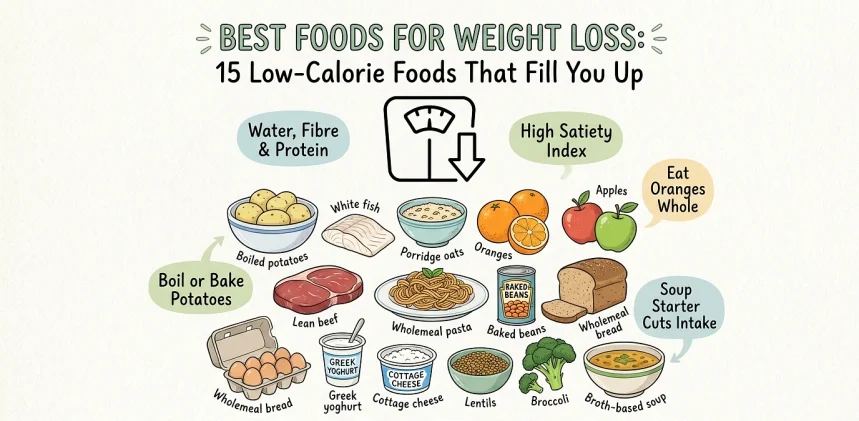
The foods worth eating when you are trying to lose weight are the ones that fill you up for very few calories. Water, fibre and protein do that job. Fat, surprisingly, works against it.
We know this because somebody measured it properly. In 1995, Susanna Holt and colleagues at the University of Sydney published A Satiety Index of Common Foods in the European Journal of Clinical Nutrition. They gave volunteers fixed 240-calorie portions of thirty-eight foods, then recorded hunger every fifteen minutes for two hours. White bread was the benchmark at 100.
Boiled potatoes scored 323. Croissants came last at 47.
When the team ran the numbers, water content was the strongest predictor of fullness (r = 0.64), ahead of fibre (r = 0.46) and protein (r = 0.37). Fat ran the other way at −0.43. That single finding explains most of the list below.
The Nine Foods With Measured Evidence Behind Them
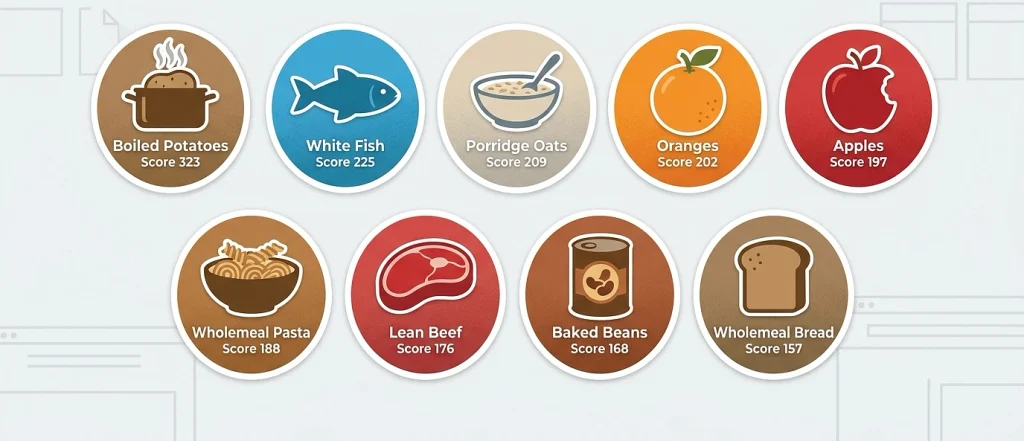
1. Boiled potatoes – 130 calories, medium potato. Score 323, the highest of anything tested. Boil or bake, never fry. Cook them a day ahead and reheat, which forms resistant starch and lowers the blood sugar response.
2. White fish – 90 calories per 100g. Score 225. Cod, haddock or pollock. Protein and water with almost no fat, which is the exact combination the research rewarded.
3. Porridge oats – 150 calories per 40g dry. Score 209. The beta-glucan fibre absorbs liquid and slows stomach emptying. Rolled oats, not instant sachets.
4. Oranges – 60 calories each. Score 202, which startled the researchers as much as anyone. Eat them whole; juice removes the fibre and the chewing.
5. Apples – 95 calories each. Score 197. Skin on, since that is where most of the fibre sits.
6. Wholemeal pasta – 220 calories per 75g dry. Score 188, against considerably less for white.
7. Lean beef – 180 calories per 100g cooked. Score 176, the best of the meats tested. Look for 5% fat or lower.
8. Baked beans – 155 calories per half tin. Score 168. Cheap, filling, and consistently underrated.
9. Wholemeal bread – 90 calories per slice. Score 157, against 100 for white at the same calories. The useful question was never bread or no bread.
Six More That Earn Their Place
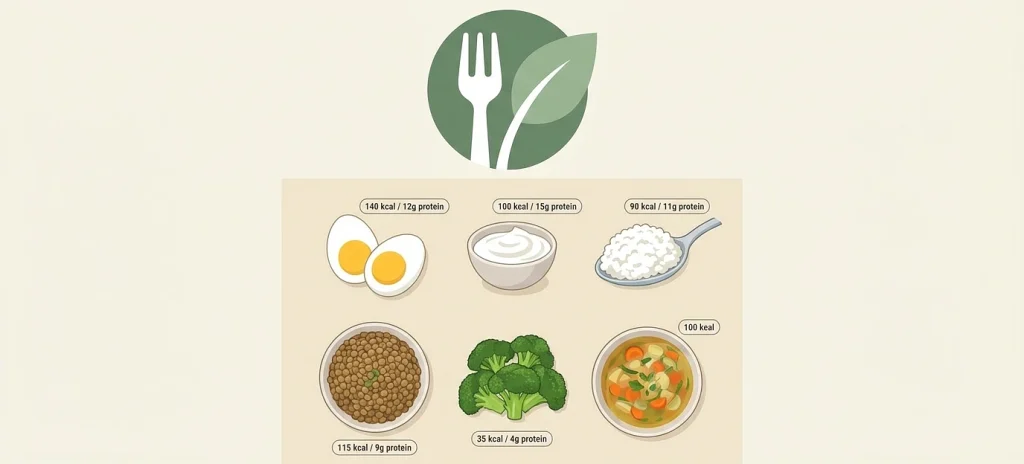
10. Eggs – 70 calories each. Six grams of protein apiece. Eaten at breakfast they reduce intake at the next meal. Two boiled eggs run to about 140 calories.
11. Greek yoghurt – 100 calories per 150g. Roughly double the protein of standard yoghurt. Buy it plain. Flavoured pots regularly carry 15 grams of sugar or more.
12. Cottage cheese – 90 calories per 100g. Casein digests slowly, which makes this genuinely useful in the evening.
13. Lentils – 115 calories per cooked half cup. Protein and fibre together for very little money. Add them to mince dishes to cut the meat without cutting the volume.
14. Broccoli – 35 calories per cooked cup. Water and fibre, and it takes up real room on a plate. Steam rather than boil.
15. Broth-based soup – around 100 calories a bowl. Barbara Rolls and her team at Penn State have published repeatedly on energy density, finding that a soup starter cuts how much people eat at the meal that follows. Broth-based, not creamy.
Building Meals From The List
- One protein and one bulky food per meal. Fish and broccoli, eggs and potatoes, lentils and whatever vegetables are in the fridge
- Protein at all three meals, rather than all of it at dinner, which is where most people put it
- Soup first on the days hunger is worst
- Cook potatoes, eggs and chicken in advance. Most poor eating happens when nothing is ready
Nothing here burns fat. These foods make a calorie deficit bearable, and bearable is the part that fails for most people. The arithmetic was never the difficult bit.
Talk to a doctor or registered dietitian before you change anything if weight is dropping without you trying, if food has started to carry anxiety or guilt, or if you are managing diabetes or a thyroid condition. Each of those changes the advice, and no general list can account for it.