

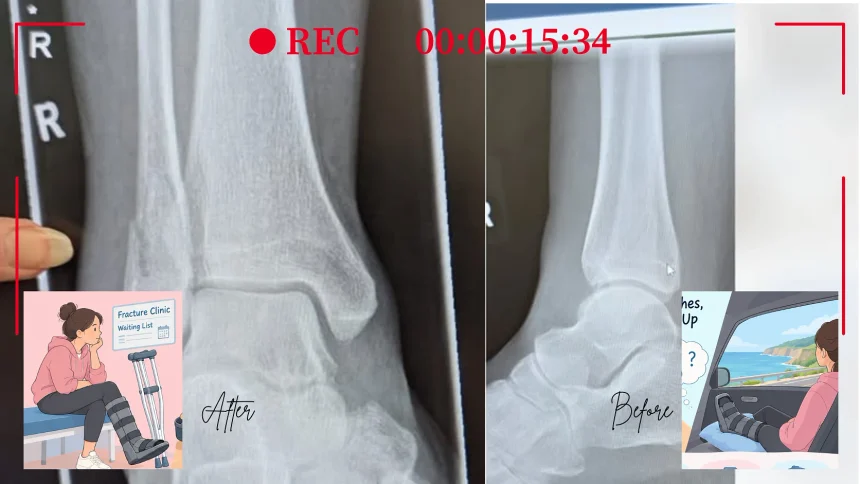
Fracture clinic waiting lists put a lot of people in the same awkward spot. The emergency team fits a boot, hands over crutches, and says the clinic will be in touch, and then weeks go by. Meanwhile, there’s a trip booked, the bags are half packed, and the one question that matters most, whether it’s okay to stand on that foot, never got a straight answer.
It needs one, though. And an X-ray photo shared online won’t give it.
Why Nobody Online Can Name the Fracture
Plenty of people will try. Someone always replies with “looks like a Weber B, you’ll be fine,” and sometimes they’re right. But a phone photo of a screen loses detail, it shows one or two angles, and it says nothing about the ligaments. The ligaments are what decide whether an ankle is stable.
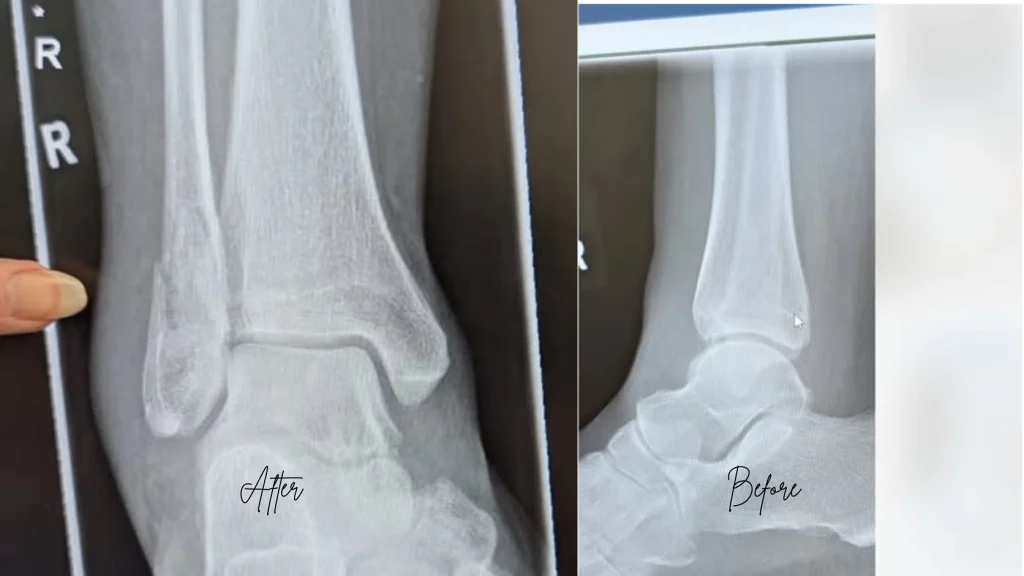
Doctors sort most ankle breaks by where the outer leg bone, the fibula, snaps in relation to the joint. Radiopaedia has a clear guide to the Weber system with images, but the short version works fine here:
- Weber A: below the joint. Usually stable, and usually a boot.
- Weber B: level with the joint. The common one, and it can go either way.
- Weber C: above the joint. Often unstable, and often surgery.
Weber B is where the guessing falls apart. The break can look neat and still sit next to torn ligaments on the inner side of the ankle, and those only show up when the ankle is loaded.
What the Boot Probably
A walking boot usually means the team read the fracture as stable. For a stable break at the ankle, walking in the boot is now pretty standard treatment, often for around six weeks. A small randomized trial even found that people who walked in the boot had better ankle function at six weeks than those kept off it in a cast.
The same trial also turned up a catch. About one in six ankles that looked stable on ordinary X-rays shifted once the patient stood up for a weight-bearing film. So “probably stable” and “stable” aren’t the same thing.
Check the discharge letter for the exact words: full weight bearing, weight bear as tolerated, partial, or non-weight bearing. One of those phrases should be on it. If it isn’t, call the unit that fitted the boot and ask them outright. Staff there can look at the notes, and they can often read out the radiologist’s report, which names the fracture type in plain words.
The Check-Up X-Ray Lands Right Around Travel Time
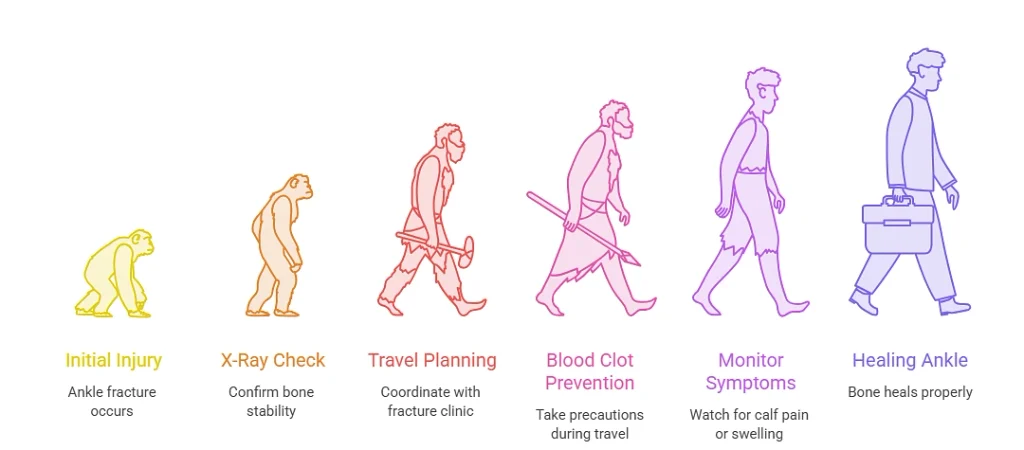
Stable ankle fractures normally get a second X-ray somewhere between one and two weeks after the injury, just to make sure nothing has moved. A trip leaving around day ten sits right in that window, which is bad timing.
Call the fracture clinic and tell them there’s a departure date. It sounds pushy, but it’s information they need, and it often gets a case reviewed sooner. A lot of hospitals now run virtual fracture clinics, where a consultant looks at the films and phones the patient back, sometimes within days. That beats finding out halfway down the highway that the bone has slipped.
Hours in a Passenger Seat
This part gets skipped, and it shouldn’t. A leg held still in a boot means slow blood flow in the calf, and a long drive stacks on top of that. Clots are a known risk with any lower-leg immobilization. The combined pill and HRT push that risk higher. Hospital leaflets like this one on blood clots in casts and boots cover it well.
Some people leave the emergency department on daily blood-thinning injections, and others don’t. If nobody raised it, raise it now.
Stop every hour or two. Walk a few steps if you’re allowed to stand. Keep wiggling your toes and bending your knee in the seat, drink more water than feels necessary, and prop the leg up whenever the van is parked.
Calf pain or swelling that feels different from the fracture pain needs checking the same day. Chest pain or sudden breathlessness means calling emergency services immediately, wherever you happen to be.
Tell the travel insurer about the fracture, too. It’s a dull phone call, but skipping it is much worse.