
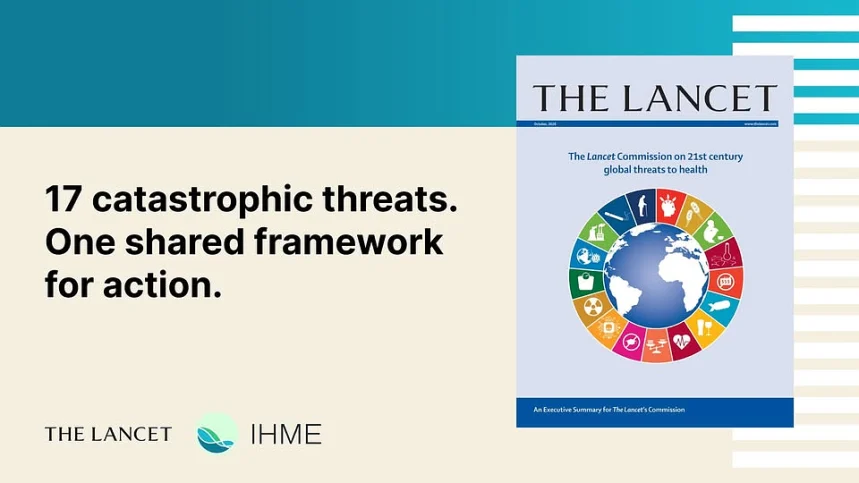
The Lancet and the Institute for Health Metrics and Evaluation (IHME) have released the full report of The Lancet Commission on 21st Century Global Threats to Health. The Commission is independent, and it looks ahead to the year 2100 to find the threats most likely to cause serious harm to human health on a global scale.
The Five Areas The 17 Threats Come From
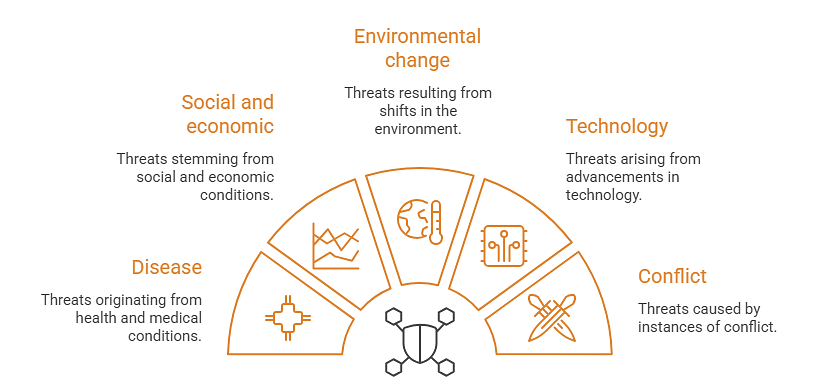
The threats fall across five broad areas:
- Disease
- Social and economic conditions
- Environmental change
- Technology
- Conflict
The Commission used both numbers and expert judgement to find these threats and rank them by priority.
How The Commission Measured Each Threat
Each threat was scored on the health loss it is expected to cause between 2025 and 2100 that policy action could reasonably change. This is measured in disability-adjusted life years, or DALYs. One DALY stands for one year of healthy life lost, either through early death or through living with illness or disability.
Only the harm that governments and institutions can still do something about was counted. That is what the report calls the amenable disease burden.
What The Report Asks Governments To Do
The Commission concludes that the size and range of these threats call for a major change in the way governments and global bodies plan for long-term risk. The report points to three areas of action for them to work on.
IHME’s Media Workshop At The World Health Summit
IHME held a media-only workshop at the World Health Summit in Berlin on Monday, October 12, titled “Reporting on Health Threats: The Story Behind Every Story.” It ran from 11:00 to 12:30 CEST (2:00 to 3:30 a.m. PDT) in Room Side Meeting I at the InterContinental Berlin, with a virtual option for journalists who could not attend in person.
The session was built for reporters. It covered the data behind the report, the policy developments linked to it, and the stories journalists should follow over the next 6 to 12 months across health, economics, technology, security and governance.
Meet Your Host