

If you have been in pain for months or years and nothing has fixed it, here’s the honest answer up front.
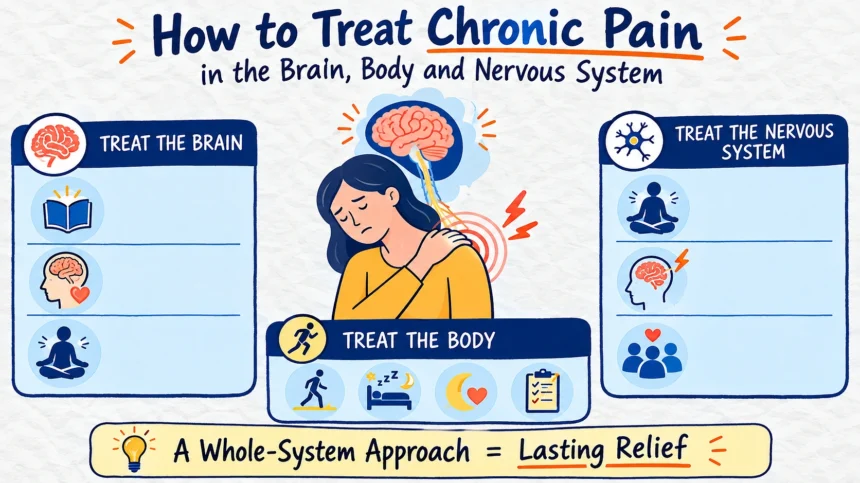
Chronic pain gets better when you treat the whole alarm system, not just the place that hurts. That means retraining how your brain interprets signals, getting your body moving again in careful steps, and settling a nervous system that has become wound far too tight.
Medication and procedures can help along the way, but on their own they almost never resolve chronic pain, because the problem is no longer in the tissues.
I say this as someone who has spent years talking with patients about pain. The people who improve are rarely the ones who found a magic treatment. They’re the ones who worked on all three levels at once, usually with a good GP and a small team around them.
First, Understand What You’re Treating
Acute pain is a friend. You touch something hot, pain makes you pull away, the lesson is learned. It protects you.
Chronic pain is different. Once pain has been around for six months or more, the original injury has usually healed, yet the pain carries on. What happened? The nervous system adapted, and not in a good way. The nerves near the old injury started firing too easily. Signals got amplified on their way up. The brain, trying to protect you, lowered the threshold for sounding the alarm.
I often describe it to patients as a smoke alarm fitted too close to the kitchen. It screams when you make toast. There’s no fire. The alarm isn’t broken in the sense of being smashed; it’s just set wrong. That’s your nervous system in chronic pain. Clinicians call it sensitization, and it produces two experiences many people recognize immediately: pain from things that shouldn’t hurt at all, like a shirt brushing your skin, and enormous pain from something minor, like a small bump or a slightly awkward movement.
One more thing matters here, and it’s the key to everything that follows. Pain is made by the brain. Always. Even the pain of a broken leg is constructed in the brain from incoming signals. That’s why an anaesthetic can switch pain off entirely during surgery, and why injured soldiers in battle sometimes feel nothing until the danger has passed. The brain can turn pain down. In chronic pain that dial is stuck on high, and treatment is largely about un-sticking it.
The encouraging part is that nervous systems are plastic. They learn, and they can unlearn. Yours learned this pain pattern over months. With the right inputs, repeated patiently, it can learn its way back out.
Treating The Brain: Change What The Signals Mean
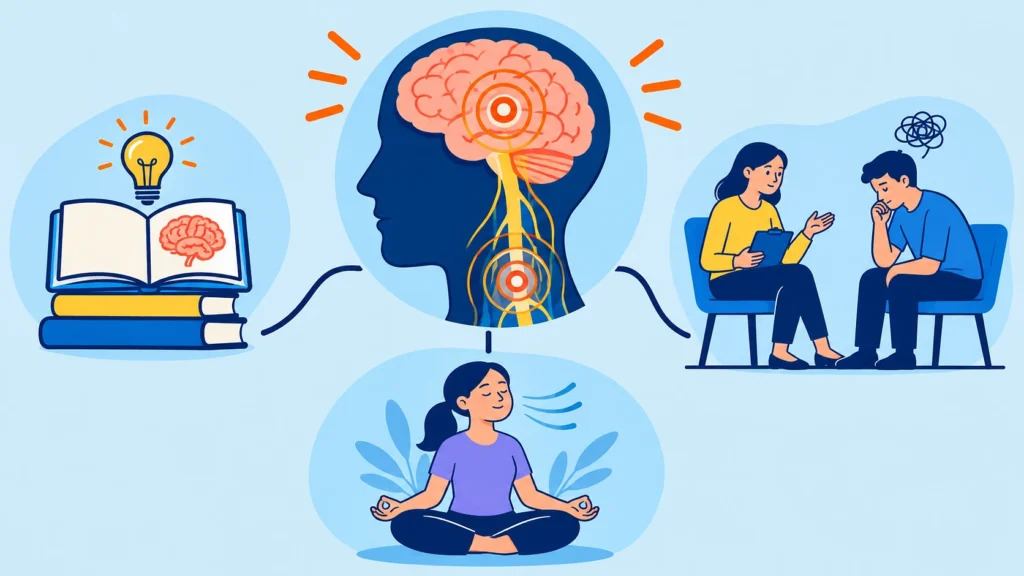
Since pain is assembled in the brain, treatment starts there. This surprises people, and some feel insulted by it, so let me be clear nothing about this means your pain is imaginary. It’s real. The point is that the organ producing it can be retrained.
Learn how pain works. This sounds too simple to count as treatment, but the research behind pain education is solid. When people genuinely understand that their pain reflects an overprotective alarm rather than fresh damage, their fear drops. Fear is petrol on this fire. Every time you move while braced for catastrophe, your nervous system takes notes. Understanding alone won’t fix you, but it makes everything else work better.
See a psychologist, and don’t skip this step. Cognitive behavioral therapy has some of the strongest evidence of any chronic pain treatment we have. It’s not about positive thinking. A good psychologist helps you unwind the fear-avoidance loop (it hurts, so I stop, so I weaken, so it hurts more), soften the catastrophizing that turns the volume up, and rebuild sleep and activity. In Australia, ask your GP for a Mental Health Treatment Plan, which gives you subsidized sessions. Give it a fair go several sessions, not one. And if the first psychologist isn’t the right fit, try another. That happens, and it’s fine.
Practice calming your brain on purpose. Slow breathing, meditation, mindfulness. Patients sometimes roll their eyes at this, but these practices activate the brain’s own pain-dampening pathways, the same ones that let an exhausted person fall asleep on a hard floor without noticing the discomfort. Ten minutes a day of slow breathing is a real input to your nervous system. Cheap, too.
Treating The Body: Move, But Move Cleverly

A sensitised nervous system hates surprises. So the way back to a working body is gradual, predictable, repeated movement that teaches the alarm system, over and over, that activity is safe.
Start lower than you think you need to. If you can walk ten minutes, walk five. Then add a little each week. Swimming, walking, gentle strength work, tai chi, whatever you’ll actually do. A physiotherapist who understands chronic pain (ask specifically) can build this progression with you. The early goal isn’t fitness. It’s evidence, for your nervous system, that movement doesn’t equal damage.
Pace yourself, especially on good days. This is where most people stumble. You feel decent, you do three hours in the garden, you can’t move for four days, and you conclude exercise doesn’t work. That boom-and-bust rhythm keeps the alarm system twitchy. Pick an amount you can do on an average day, do it on good days and bad days alike, and increase slowly. It feels almost too cautious. It works because it’s consistent.
Guard your sleep like it’s medicine, because it is. Broken sleep directly increases pain sensitivity; deep sleep restores the brain’s ability to turn signals down. Regular hours, dark cool room, screens off earlier than you’d like. If sleep is genuinely broken, raise it with your GP rather than enduring it.
Have a flare-up plan written down. Flare-ups will happen. They are part of recovery, not proof you’ve re-injured yourself. Ease off briefly without stopping entirely, use your breathing, keep some gentle movement going, and return to your normal level within a day or two. Every flare-up you handle calmly teaches your brain there was no emergency.
Treating The Nervous System: Lower The Background Tension
Between the brain and the body sits the wiring itself, and in chronic pain that wiring is strung tight. You can’t directly order your nerves to calm down, but you can change the conditions they live in.
Stress is the big one. Stress hormones and a switched-on fight-or-flight response feed sensitisation directly. You can’t remove stress from your life, but you can discharge it: the breathing practice above, time outside, music, gardening, laughing with someone, proper rest. These aren’t soft extras. They shift your nervous system toward the state in which it heals.
Also worth knowing: sensitisation is often widespread, which is why so many people with chronic pain collect diagnoses. Back pain plus migraines plus jaw pain plus irritable bowel plus fibromyalgia. If that’s you, treat it as one nervous system problem with several outlets, not five separate mysteries. That reframe alone steers you toward treatments that actually match the problem.
A word on medication, because patients always ask. It has a role: turning the volume down enough that you can do the retraining work. It is support, not solution. Long-term reliance on painkillers alone, especially opioids, tends to disappoint and can leave the system more sensitive. Review what you’re taking with your GP regularly, and judge medicines by what they let you do, not just by the pain score.
And be patient with the timeline. Nervous systems rewire the way they learned through repetition, over weeks and months. Progress is rarely a straight line. A bad week doesn’t erase a good month.
The Part Nobody Wants To Hear: Your Life Affects Your Pain
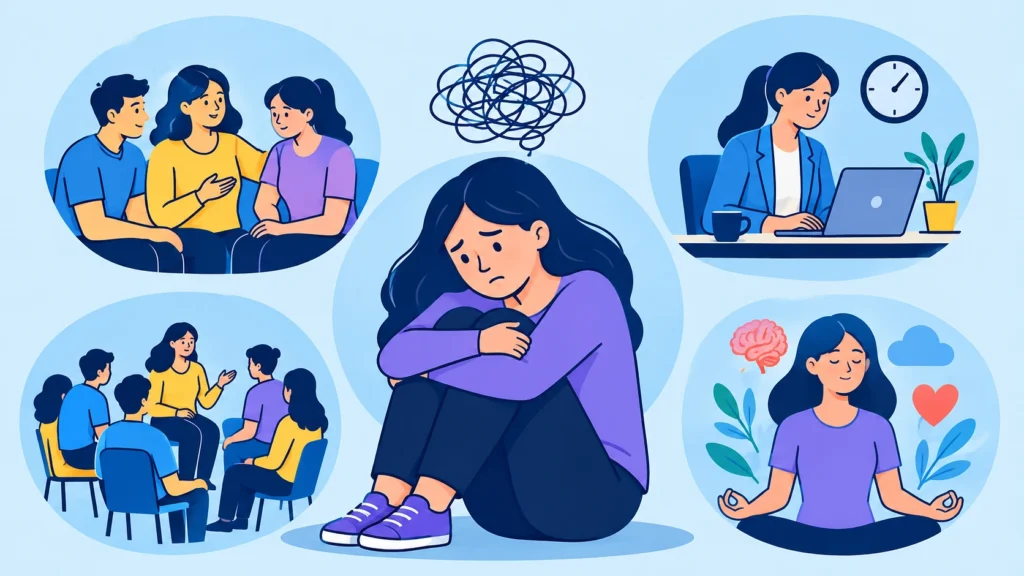
Chronic pain is a biopsychosocial condition, and any treatment that ignores the last two parts tends to fail. I’ve watched this play out many times. Pain isolates people. They cancel plans, struggle at work, feel brushed off by busy specialists, and slowly slide toward anxiety and hopelessness. That emotional weight then amplifies the pain, which deepens the isolation. Around it goes.
Breaking that loop is treatment, not optional comfort. Stay connected to people even when you don’t feel like it. Keep a foot in work if you possibly can, with modified duties if needed; purpose and routine are therapeutic. If depression or anxiety have moved in, treat them directly, because they pour fuel on pain. A support group of people who actually live with chronic pain can do something no clinician can: make you feel understood.
Many of us are too proud to ask for psychological help, or don’t recognize that we need it. I’d gently suggest that pride is expensive here.
What To Stop Chasing
Just as important as what to do is what to drop:
- Rest as a strategy. Beyond a day or two for a flare, rest weakens you and confirms the brain’s fear story.
- Scan after scan. Most imaging findings are common in people with no pain at all, and they rarely explain chronic pain.
- Purely passive treatment. Anything done to you without active retraining gives short relief at best.
- Opioids as the main plan. Poor long-term results, real risks.