


Key Takeaway:
WellHealthOrganic beauty tips in one breath eat the rainbow, drink 2-3 litres of water daily, sleep 7-9 hours, swap harsh chemicals for organic alternatives, double-cleanse at night, use SPF 30+ every morning, oil-massage your scalp weekly, and manage stress with 10 minutes of mindfulness. A 2024 industry survey found that 73% of consumers now prefer clean-beauty products, and dermatology data show daily SPF use can reduce visible signs of skin ageing by up to 24% over four years. Beauty starts inside, shows up outside.
WellHealthOrganic Beauty Tips: Natural Radiance from Within
Walk into any pharmacy aisle today and you’ll see hundreds of bottles promising glass skin in 14 days. Most of them won’t deliver – and a few will leave your skin worse than they found it. The truth most beauty editors quietly agree on? The products doing the heavy lifting are usually the simple ones: a gentle cleanser, sunscreen, a good moisturiser, and what’s on your plate.
That’s the WellHealthOrganic philosophy in one line nourish from within, protect from outside, and let your skin do what it’s been designed to do for the last 200,000 years.
The global organic beauty market is projected to reach USD 25.1 billion by 2030, growing at roughly 9.5% per year (Grand View Research, 2024) – a clear sign people are voting with their wallets for cleaner, kinder formulas. This guide brings together what actually works: science-backed habits, real ingredients, and routines you can stick with.
Why “Organic” Matters For Your Skin
- Lower chemical load: the average person applies around 168 chemicals to their body daily through personal-care products (Environmental Working Group). Organic formulas typically use 30-60% fewer synthetic actives.
- Skin barrier respect: sulphate-free and paraben-free formulas help maintain the skin microbiome, which has roughly 1,000 species of beneficial microbes.
- Sustainability: certified-organic farming uses up to 45% less energy and produces 40% less greenhouse gases than conventional ingredient sourcing (Rodale Institute).
Skincare Fundamentals: The Routine That Earns Its Place
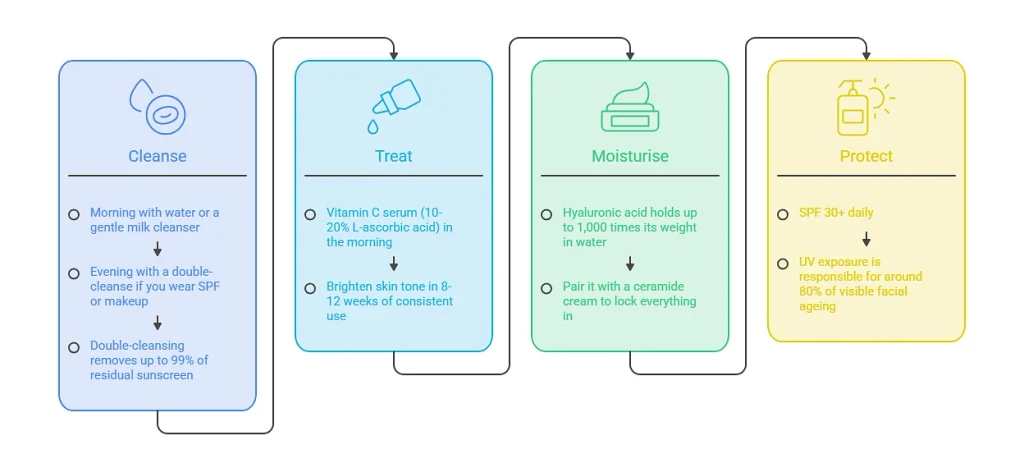
The 4-Step Routine That Beats A 10-Step Shelf
- Cleanse – morning with water or a gentle milk cleanser; evening with a double-cleanse if you wear SPF or makeup. Studies show double-cleansing removes up to 99% of residual sunscreen.
- Treat – a vitamin C serum (10-20% L-ascorbic acid) in the morning can brighten skin tone in 8-12 weeks of consistent use.
- Moisturise – hyaluronic acid holds up to 1,000 times its weight in water; pair it with a ceramide cream to lock everything in.
- Protect – SPF 30+ daily. UV exposure is responsible for around 80% of visible facial ageing (American Academy of Dermatology).
Organic Ingredients Worth Knowing
Rosehip oil is rich in vitamin A & linoleic acid and reduces scars, making it best for dull, scarred, mature skin. Aloe vera hydrates and soothes inflammation by ~30%, and is best for sensitive, sunburnt skin. Turmeric works because curcumin is anti-inflammatory and brightening, which suits pigmentation and dullness. Honey (raw) is antibacterial and supports wound healing, best for acne-prone skin. Green tea extract is an EGCG antioxidant that reduces UV damage, best for ageing and redness. Niacinamide reduces pore size and balances oil, best for combination and oily skin.
DIY Masks That Actually Work (And Ones To Skip)
- Honey + turmeric (1 tsp + a pinch) – 10 minutes, 2x a week. Studies show topical honey improved acne lesions by 35% in 4 weeks.
- Yoghurt + oats for a gentle exfoliation; lactic acid removes dead cells without irritation.
- Mashed papaya – papain enzyme dissolves dead skin and brightens.
- Lemon juice (pH 2 – too acidic).
- Baking soda (disrupts skin barrier).
- Toothpaste on pimples (causes burns in 1 of 3 users).
Hair Care Naturally
The average scalp has 100,000 hair follicles, and the average person loses 50-100 hairs a day – that’s normal. Hair growth slows about 0.5 cm a month past age 30, which is why nutrition and scalp care quietly become more important than the latest shampoo bottle.
The Weekly Hair-Care Rhythm
- Sunday oil massage – 10-15 minutes of warm coconut, almond, or amla oil. A 2003 study found coconut oil reduced protein loss in hair by up to 39% versus mineral oil.
- Wash 2-3 times a week with a sulphate-free shampoo. Daily washing strips natural sebum.
- Cool-water rinse at the end seals the cuticle and adds shine.
- Air-dry when you can – heat styling above 175°C damages keratin permanently.
- Silk pillowcase – reduces breakage by up to 43% versus cotton.
Foods That Feed Your Follicles
- Eggs – biotin and protein; 1 egg = 10 mcg biotin (33% RDA).
- Spinach – iron, folate; iron deficiency is behind ~30% of female hair loss.
- Walnuts – omega-3 and zinc.
- Sweet potato – beta-carotene converts to vitamin A.
- Greek yoghurt – vitamin B5 supports scalp circulation.
Nutrition for Beauty: Glow Starts on Your Plate
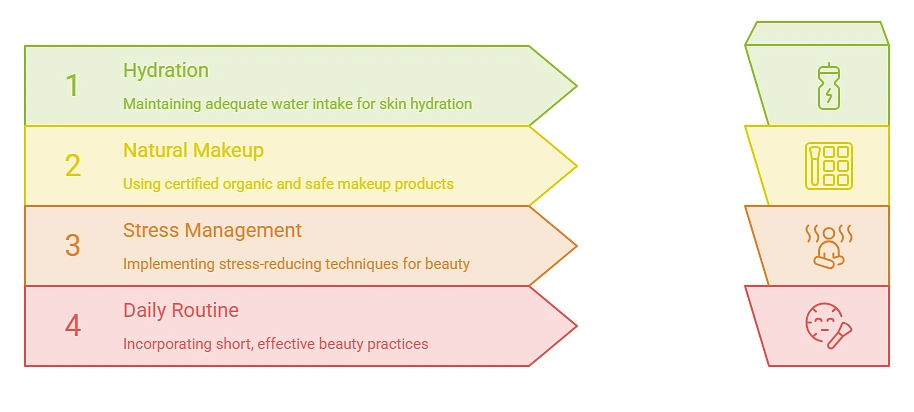
Skin renews its outer layer every 27-40 days. What you eat in this cycle quite literally becomes the next layer of your skin.
The Beauty-Nutrient Cheat Sheet
Vitamin C has a daily target of 75-90 mg, with amla, guava, citrus and peppers as the best food sources; it boosts collagen synthesis by ~40%. Vitamin E has a daily target of 15 mg from almonds, sunflower seeds and avocado, and protects against UV damage. Omega-3 needs 1.1-1.6 g daily from salmon, flax, chia and walnuts, and reduces inflammation and plumps skin. Zinc needs 8-11 mg daily from pumpkin seeds, chickpeas and beef, and cuts acne severity by up to 49%. Biotin needs 30 mcg daily from eggs, nuts and sweet potato for stronger hair and nails. Collagen peptides need 10 g daily from bone broth or supplements, and improve skin elasticity in 8 weeks.
Hydration: The Most Underrated Beauty Hack
Even 1-2% dehydration shows on the face within hours. Aim for 2-3 litres a day; if your urine looks like apple juice, you’re behind. Add a slice of cucumber and a sprig of mint – or a teaspoon of chia for glow-supporting omega-3s.
Natural Makeup & Enhancement
The global natural makeup market is forecast to hit USD 13.6 billion by 2027. Here’s how to lean in without overspending:
- Look for COSMOS, Ecocert, USDA Organic certifications.
- Avoid the “dirty dozen”: parabens, phthalates, synthetic fragrance, formaldehyde-releasers, oxybenzone, talc, BHA/BHT, PEGs, triclosan, coal tar, mercury, hydroquinone.
- Tinted SPF + a cream blush + tinted lip balm = a 5-minute, no-makeup look that protects skin.
- Replace mascara every 3 months; bacterial counts triple after that.
Stress Management and Beauty
Cortisol is a beauty thief. Chronic stress can increase sebum production by 30%, trigger flare-ups in eczema and psoriasis, and accelerate the breakdown of collagen and elastin.
5 Minutes A Day, Real Results
- Box breathing (4-4-4-4) – lowers cortisol within 90 seconds.
- Daily walk in daylight – 20 minutes can lift mood as much as low-dose SSRIs (BMJ, 2018).
- Gratitude journaling – 3 lines a night; linked to 23% lower cortisol levels in clinical trials.
- Face yoga – 30 minutes daily for 20 weeks improved upper- and lower-cheek fullness in a Northwestern University study.
Sleep and Recovery: The Original Night Cream
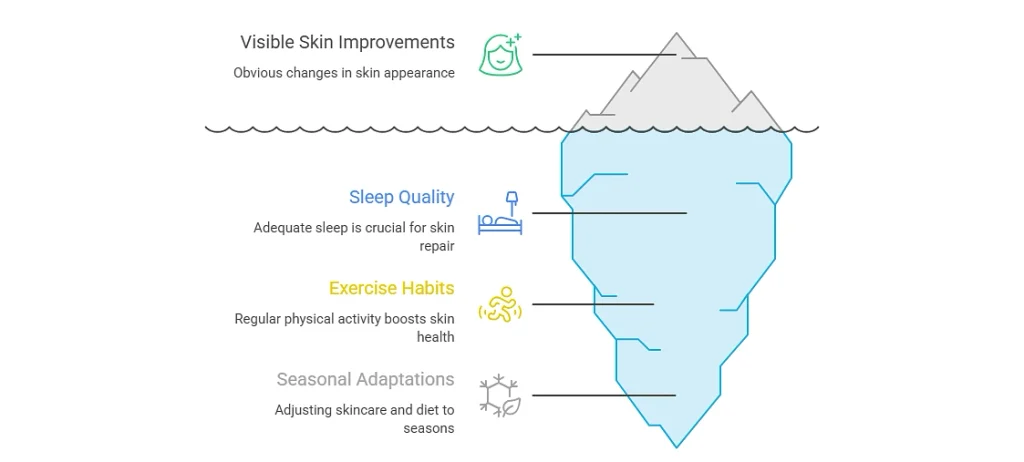
Skin makes most of its repairs between 11 pm and 4 am. Studies on “poor sleepers” (under 5 hours a night) show twice the signs of intrinsic skin ageing and slower barrier recovery after UV exposure compared with good sleepers (University Hospitals Case Medical Center).
- Aim for 7-9 hours; even one night of 4 hours can age the skin’s appearance overnight.
- Sleep on your back when possible to reduce sleep lines.
- Keep the bedroom at 18-20°C – cooler temperatures improve melatonin production.
- No screens 30 minutes before bed; blue light suppresses melatonin by up to 50%.
Exercise and Movement: The Cheapest Serum
Regular moderate exercise increases blood flow to the skin by up to 200%, delivering oxygen and nutrients while flushing waste. A McMaster University study found people who exercised twice a week (40+ min) had skin that looked decades younger under the microscope, regardless of age.
- 150+ minutes of moderate cardio per week (walking, cycling, swimming).
- 2 strength sessions – muscle releases myokines that support skin repair.
- 10 minutes of yoga or stretching for stress and circulation.
- Always cleanse within 30 minutes post-workout to prevent breakouts.
Seasonal Beauty Adaptations
In Summer, the skin priority is SPF 50, lightweight gel moisturiser and blotting; the hair priority is UV hair mist and leave-in conditioner; and the diet shift is watermelon, cucumber and coconut water.
In Monsoon, the skin priority is anti-fungal cleanse and niacinamide; the hair priority is to wash 3-4x/week to combat scalp fungus; and the diet shift is turmeric milk, ginger and tulsi tea.
In Winter, the skin priority is cream cleanser and ceramide-rich moisturiser; the hair priority is deeper oil massages and a weekly hair mask; and the diet shift is ghee, dates, sesame and hot soups.
In Spring, the skin priority is gentle exfoliation and antioxidants; the hair priority is to trim split ends and use a scalp scrub; and the diet shift is greens, sprouts and citrus.
Special Concerns: Targeted, Gentle Solutions
Acne
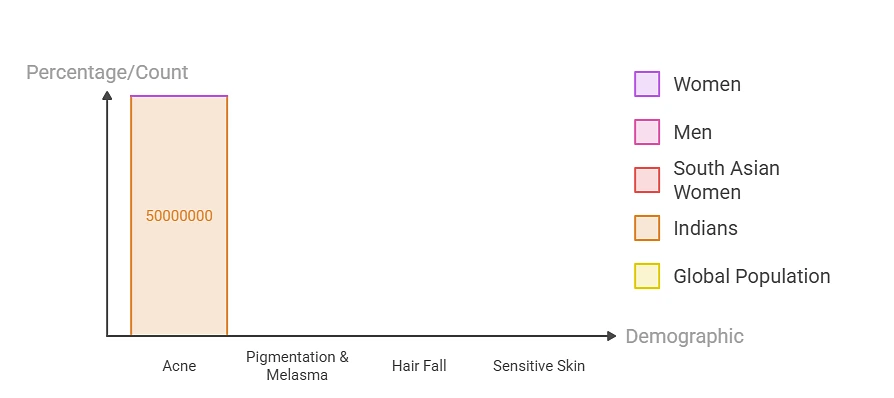
Affects ~9.4% of the global population; 50 million Indians experience it yearly. Try: 2% salicylic acid, niacinamide, tea tree oil (5%); zinc-rich diet pillowcase change every 2-3 days.
Pigmentation & Melasma
Hits up to 40% of South Asian women aged 20-50. Vitamin C (morning) + niacinamide + religious SPF cuts new pigment by 60% in 12 weeks.
Hair Fall
WHO: ~50% of men and 25% of women experience pattern hair loss by age 50. Address iron, vitamin D, ferritin, and thyroid first – 80% of cases have a nutritional or hormonal trigger.
Sensitive Skin
Around 60-70% of women report sensitive skin. Patch-test new products on the inner forearm for 48 hours. Look for fragrance-free, alcohol-free, and pH 5.5 formulas.
FAQs
Eat a colourful diet, hydrate, sleep 7-9 hours, double-cleanse at night, wear SPF every morning, and use simple organic actives like vitamin C, niacinamide, and rosehip oil.
For most people with sensitive or barrier-compromised skin, yes. Certified organic formulas avoid common irritants and have a lower allergen load. Always check ingredient lists – “natural” is unregulated; “COSMOS Organic” is certified.
Skin turns over every 28-40 days, so most visible results appear in 6-12 weeks of consistency. Hair growth is slower – expect 3-6 months for noticeable changes.
Tea tree oil (diluted), green tea, niacinamide, willow bark (natural salicylic acid), and clay masks 1-2x weekly.
For masks and hair oils, yes. For serums and moisturisers, usually no – DIY versions lack preservatives and can grow bacteria within 48 hours.
Yes. UVA penetrates window glass and accounts for 95% of UV reaching the skin. Daily SPF reduces visible ageing by ~24% over four years (Hughes et al., 2013).
Around 2-3 litres a day for most adults, more if you exercise or live in a hot climate.
Yes. Cortisol increases sebum and inflammation; studies show acne flare-ups rise by 23% during high-stress exam periods in students.
Disclaimer: This article is for informational purposes only and does not replace professional medical or dermatological advice. Always consult a qualified practitioner before changing your routine, especially if you have a known skin condition.